
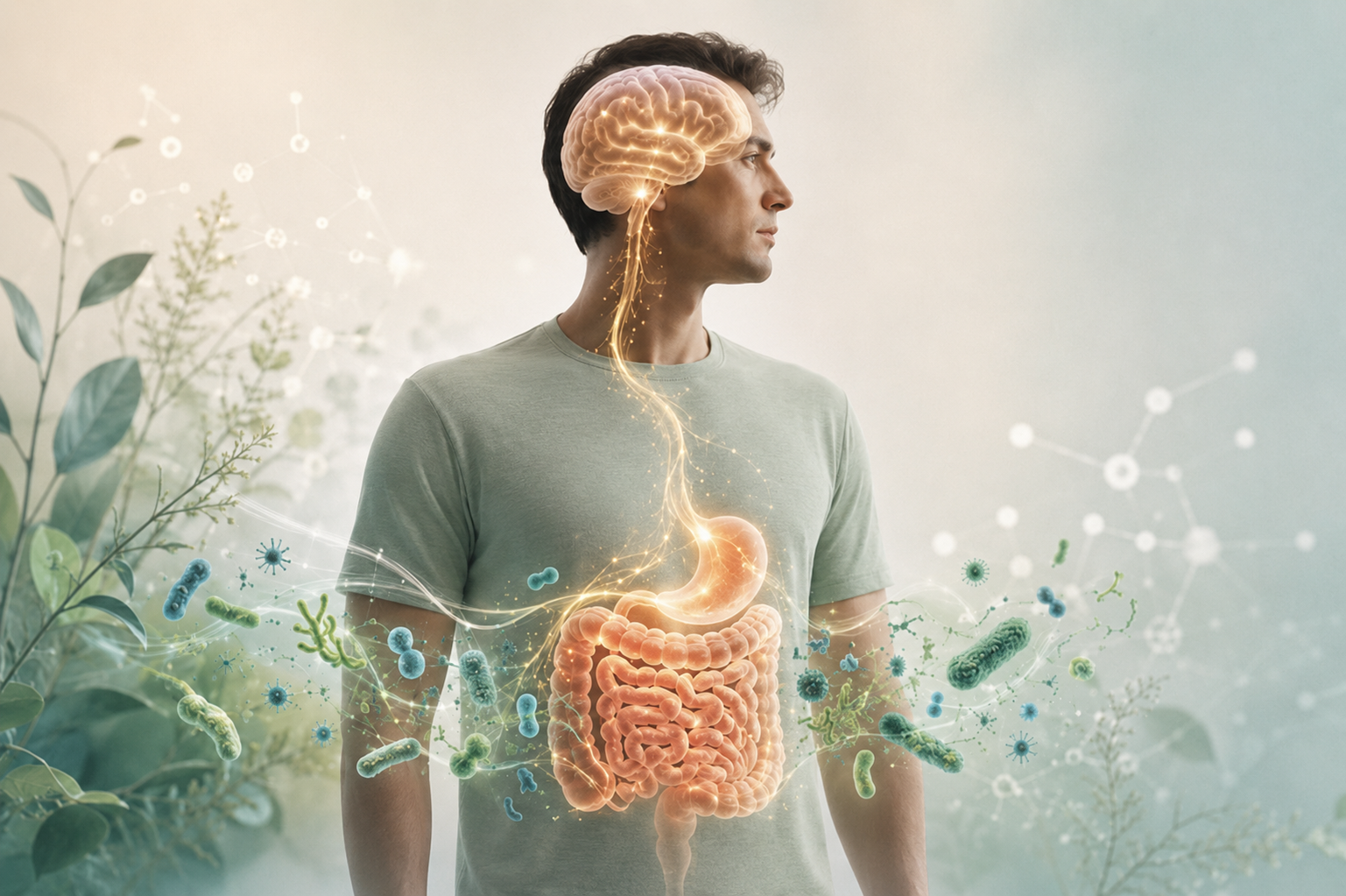
Psychobiotics: How Gut Bacteria Influence Mental Health
The bacteria living in your gut aren’t just there to help digestion, they’ve been quietly involved in regulating your mood. Emerging evidence in the field of psychobiotics indicates that specific bacterial strains within the gut microbiome play a direct role in the biosynthesis of neuroactive compounds implicated in mood regulation and stress response, including GABA, serotonin precursors, and short-chain fatty acids. This suggests that presentations of anxiety or low mood which do not resolve through conventional stress-management approaches alone may, in part, reflect an underlying disruption in gut-derived neurotransmitter production rather than a purely psychological or behavioural aetiology.
In other words, the gut-brain connection is real and measurable, and that changes how we might assess and treat mood-related symptoms.
What Are Psychobiotics?
Psychobiotics are live microorganisms that, when present in adequate amounts, confer a measurable mental health benefit. Unlike a general probiotic taken for digestive comfort, psychobiotic strains have a specific, researched effect on the gut-brain axis. The gut-brain axis is the bidirectional communication network linking your digestive system and your central nervous system.
Simply put, certain beneficial bacteria don’t just help you with digestion. They help produce the chemical messengers your brain uses to regulate mood, stress and anxiety.
How Psychobiotics Influence the Gut-Brain Connection
GABA Production:
Certain strains of Lactobacillus and Bifidobacterium are capable of synthesising GABA (gamma-aminobutyric acid), the brain’s primary inhibitory neurotransmitter, also known as the “calming” chemical. GABA works by dampening excessive neural activity, which is why low GABA function is so strongly associated with anxiety and a heightened stress response. When gut bacteria that produce GABA are depleted or imbalanced, that calming influence can be compromised.
Serotonin Precursors:
Around 90% of the body’s serotonin, often referred to as the “feel-good” neurotransmitter, is produced in the gut, not the brain. Even though gut-derived serotonin can’t cross into the brain, gut bacteria still influence brain serotonin indirectly. They help convert dietary tryptophan into serotonin precursors, which are essential building blocks for the serotonin synthesis pathway. A disrupted microbiome can interfere with this conversion process.
The Vagus Nerve:
The vagus nerve is thought to be one of the primary pathways through which beneficial bacteria communicate with and help regulate the stress response. When you’re stressed or anxious, vagus nerve signaling weakens, and because the vagus nerve connects to so many organs throughout the body, this can have wide reaching effects on digestion, heart rate, mood, and immune function. Healthy colonisation of the gut microbiota can help restore normal vagal nerve responses by enhancing vagus nerve activity and offer protection against the negative effects of stress.
Short-Chain Fatty Acids (SCFAs):
When gut bacteria ferment dietary fibre, they produce short-chain fatty acids, primarily butyrate, propionate, and acetate. These SCFAs do far more than support digestive health. They help maintain the integrity of the gut lining, reduce systemic inflammation, and influence the regulation of stress hormones like cortisol. Because inflammation and dysregulated cortisol are both closely tied to anxiety and mood disorders, SCFA production is an important, and often overlooked, piece of the puzzle.
How Can I Support My Gut-Brain Axis?
While research into psychobiotics is still evolving, the current evidence points toward gut health being an important, and often underutilised, lever for supporting mental resilience. This may include:
● Increasing dietary fibre intake to fuel SCFA-producing bacteria
● Supporting a diverse, well-balanced microbiome
● Considering targeted probiotic strains with researched psychobiotic effects
● Addressing gut inflammation or dysbiosis that may be disrupting neurotransmitter production.
Among the most researched psychobiotic strains are Lactobacillus paracasei and Lactobacillus plantarum, which have been specifically studied for their role in supporting the gut-brain axis. Clinical trials have shown that these strains can help improve cognition and mood, and help modulate the hypothalamic-pituitary-adrenal (HPA) axis, the body’s central stress response system, with one study finding reduced cortisol levels during exam-induced stress and another showing improvements in psychological and physiological markers of stress and anxiety. Talk to your healthcare practitioner about incorporating these specific strains into your daily routine. Remember, not all probiotic products are created equal, quality and strain specificity can vary significantly between them.
Psychobiotics and Mental Health: The Takeaway
Your mood isn’t just controlled by your brain. It’s shaped by an entire ecosystem of bacteria working behind the scenes, producing the very compounds your brain needs to stay calm, regulated, and resilient under stress. Supporting your gut microbiome isn’t just a digestive health strategy, it might be one of the most overlooked tools available for supporting your mental wellbeing. If you’re curious how this applies to your own gut health, working with a naturopath can help you further explore and understand your gut health..
Amy is a Clinical Naturopath specialising in cycle health and gut health, supporting women, men and children online Australia-wide and in person in Brisbane. Book an appointment with Amy to help get to the root of persistent low mood or anxiety.
We offer Naturopathy and Nutritional Medicine consultations
at 2 convenient locations, Brisbane CBD and Kenmore as well as online consultations.